Kitchen cabinet
painting.
Kitchen cabinets and bath vanities cleaned, sanded, primed and finished hard enough for daily use.
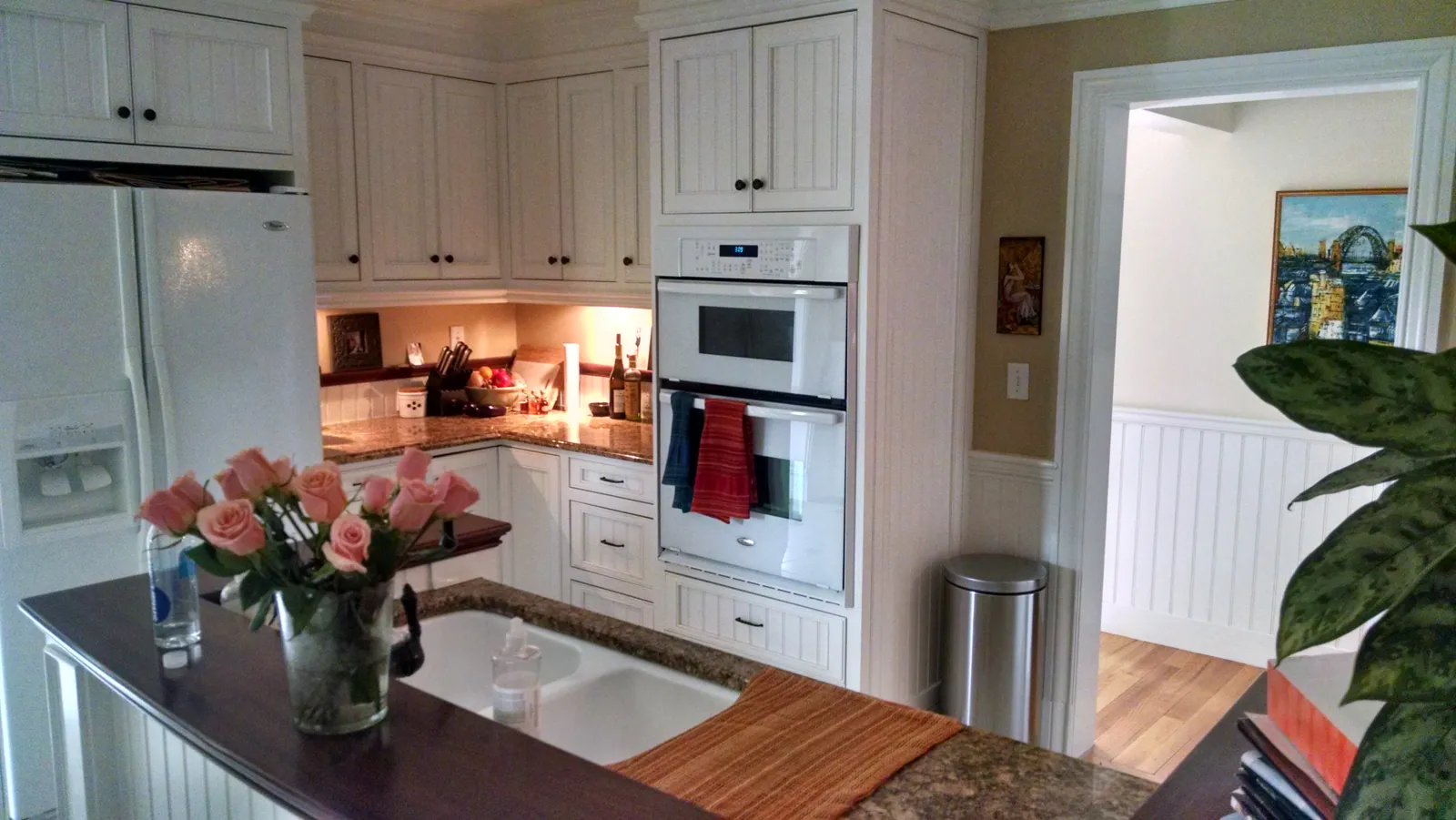
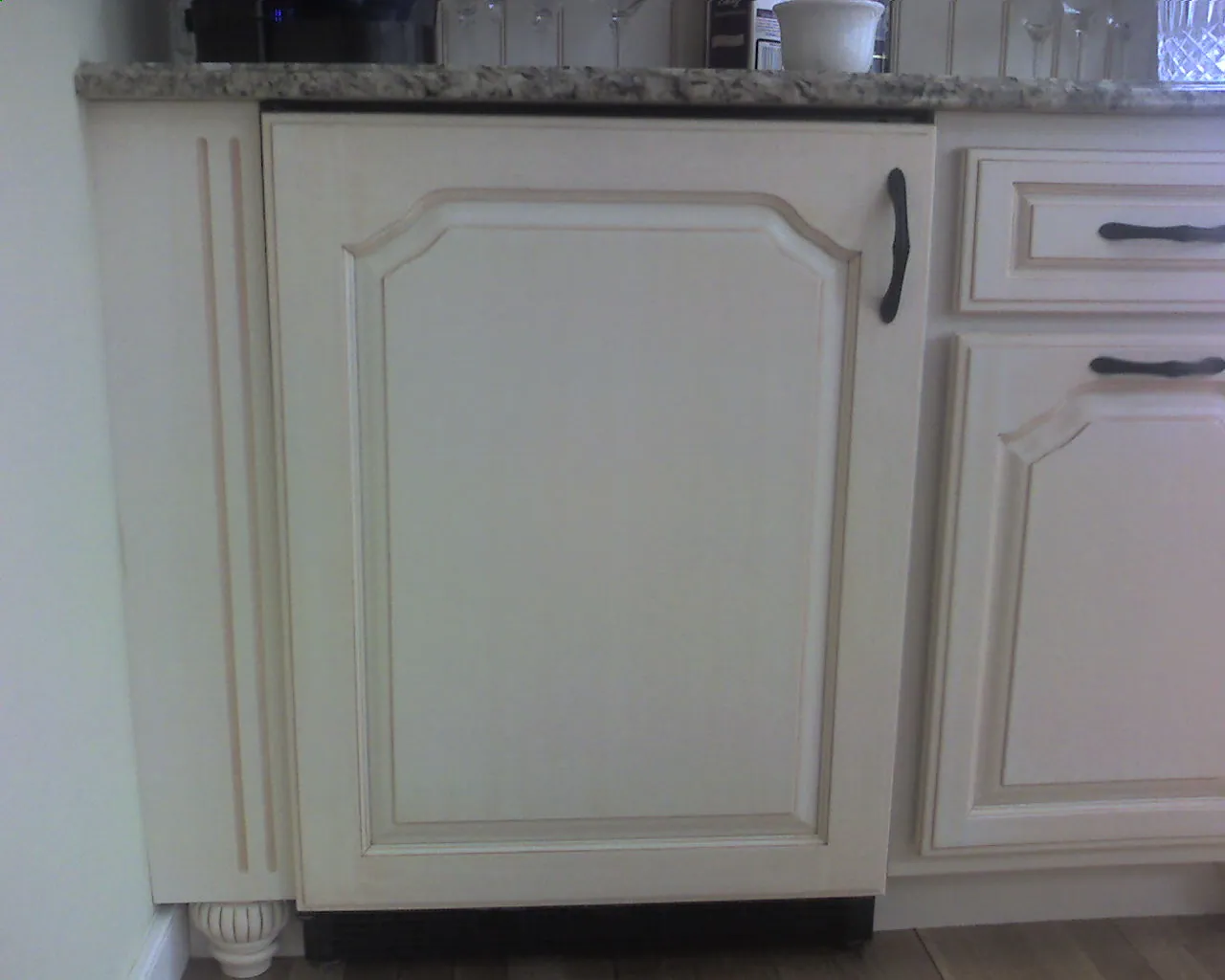
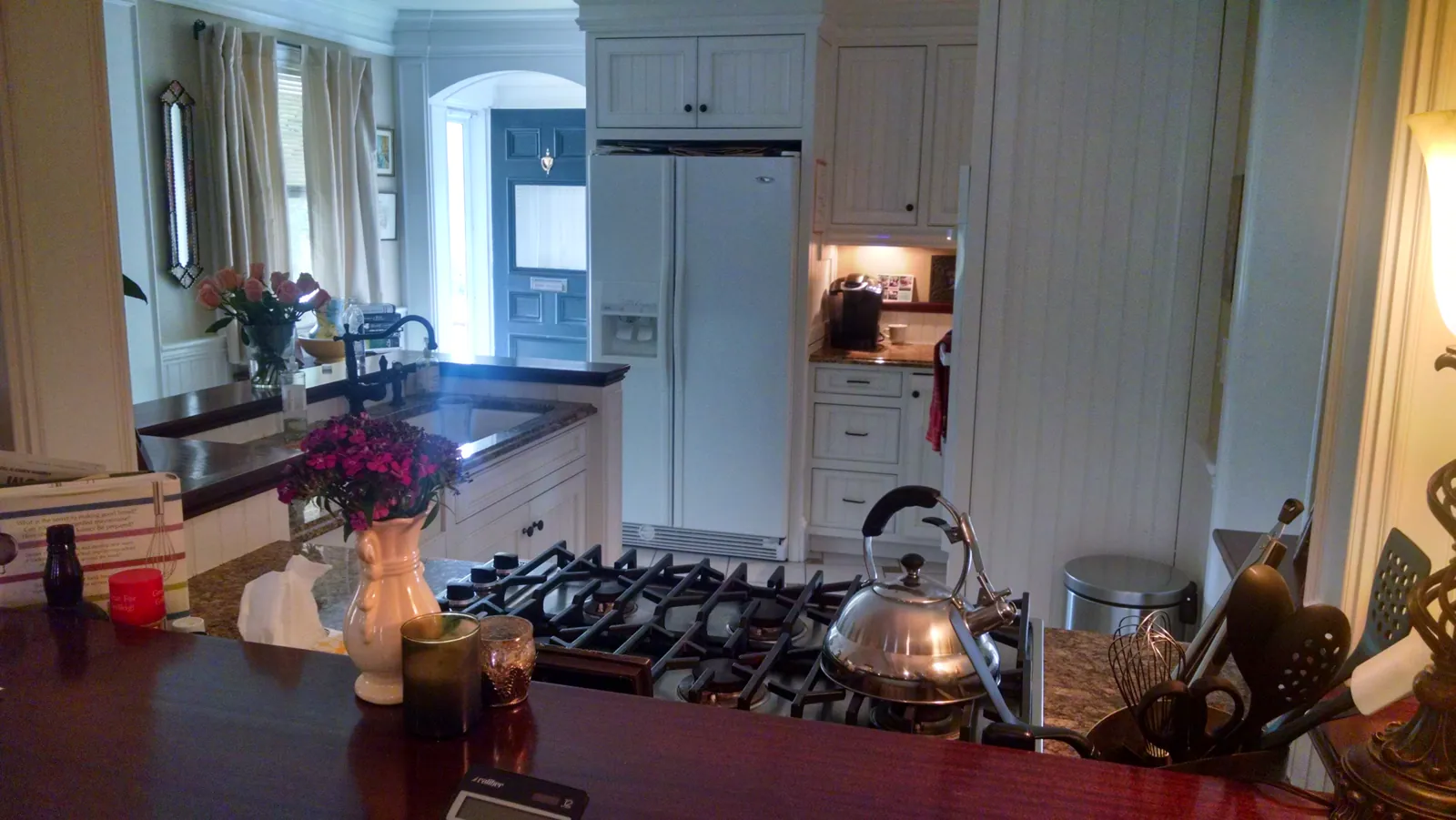
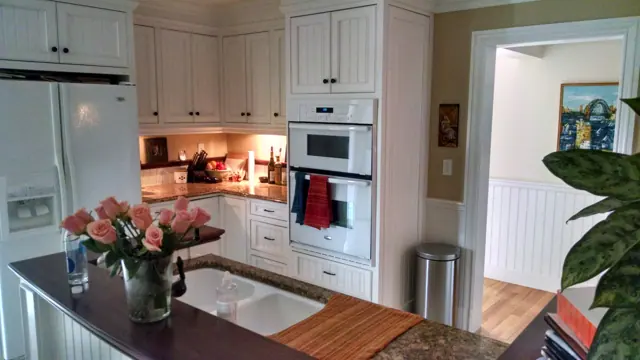
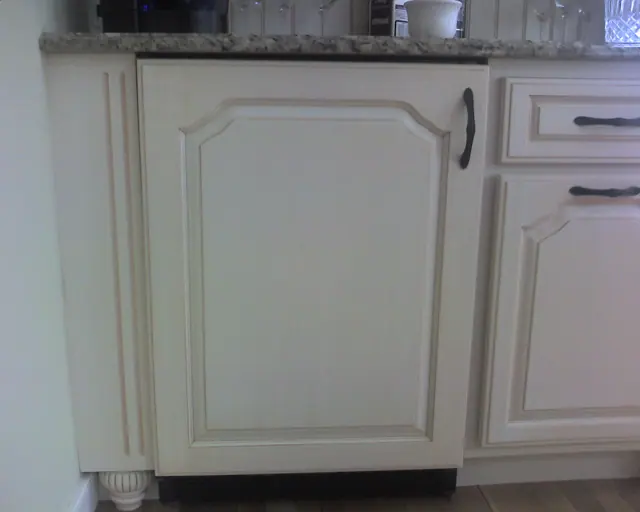
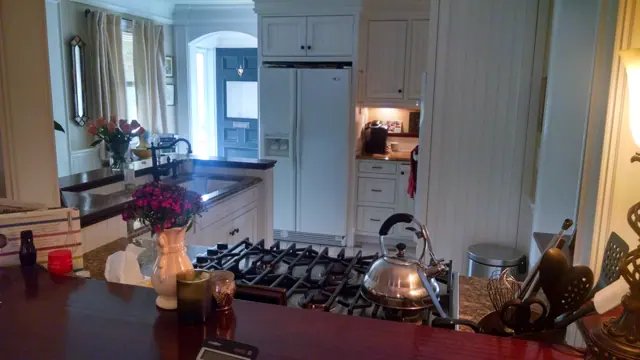
Kitchen with white painted cabinets and trim
How Ed does
cabinet painting.
Painting kitchen cabinets is a good way to change a kitchen without tearing it out. It's also unforgiving work. Doors open and close all day, hands carry grease, and any shortcut in the prep shows up as chips along the edges within months.
Ed starts by looking at what the cabinets are made of and what's on them now. Stained oak, old paint and factory finishes each need a different approach. He explains it all in the written estimate, including how long your kitchen will be out of use.
What's included
- DegreasingKitchen grease is cleaned off first, because nothing sticks to it.
- Sanding and fillingSurfaces are scuffed so primer can grip, and dings are filled.
- Bonding primerA primer chosen for the cabinet surface, so the topcoat holds at the edges.
- A hard, smooth finishAn enamel made for cabinets and trim, laid on for a smooth, even surface.
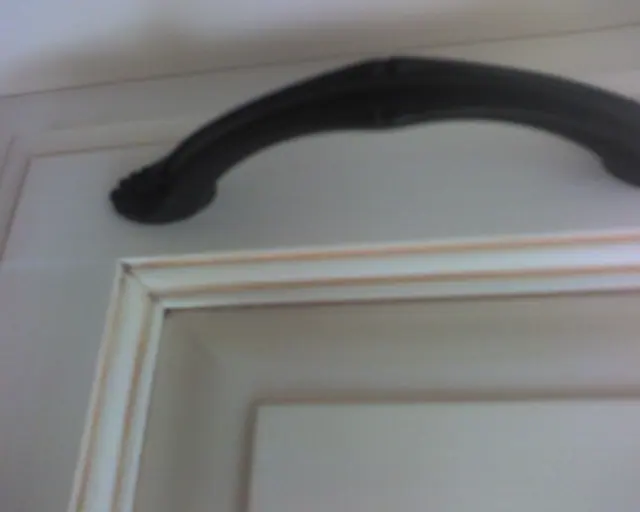
- Doors, frames and built-insCabinet boxes, doors, drawer fronts, bathroom vanities and built-in shelving.
- Hardware off and back onHinges and pulls come off before painting and go back on at the end.
5 steps,
in the right order.
He checks the material, the existing finish and the condition of the doors and edges.
The prep, primer and finish are listed, with a schedule for when the kitchen will be in use.
Counters, floors and appliances are covered, and the doors and hardware come off.
Everything is degreased, sanded and primed with a product that bonds to that surface.
Finish coats go on smooth and are left to dry, then the doors and hardware are rehung and adjusted.
Want this on your house?
Why it
lasts.
Painted cabinets last when the paint is properly bonded and fully cured. Most chipping starts at the edges, where grease was left behind or primer was skipped. Ed's crew cleans and sands every surface, uses a primer suited to the existing finish, and finishes with an enamel made to harden rather than stay soft. The finish then gets time to cure before heavy use. Treated gently for the first few weeks, a painted kitchen holds up to everyday life for years.
- C2 PaintRich, deep color that holds
- California PaintsInterior and exterior paints
- Benjamin MooreClassic colors, trusted finishes
“It’s been a few months and the cabinets look as great today as they did when they were first painted.”
Questions about
cabinet painting.
Or ask Ed himself: call now.
How long will my kitchen be out of use?
It depends on the number of cabinets and the finish, but plan on several days. Ed will give you a schedule in the estimate.
Is painting kitchen cabinets worth it?
If the boxes and doors are solid, painting changes the look of the kitchen without tearing anything out. If they're damaged or falling apart, Ed will tell you on the walk-through.
Can you paint stained oak cabinets?
Yes, with proper cleaning, sanding and primer. Oak has an open grain, so ask Ed how much of the texture will show through the paint.
How long do painted cabinets last?
Years, when the prep is done properly. The finish keeps hardening for a few weeks, so go gently with it at first.
What affects the cost of cabinet painting?
The number of doors and drawers, the size of the cabinet boxes, what they're made of and what finish is on them now. Ed counts it all on the walk-through and gives you a detailed written estimate.
Do you paint vanities and built-ins?
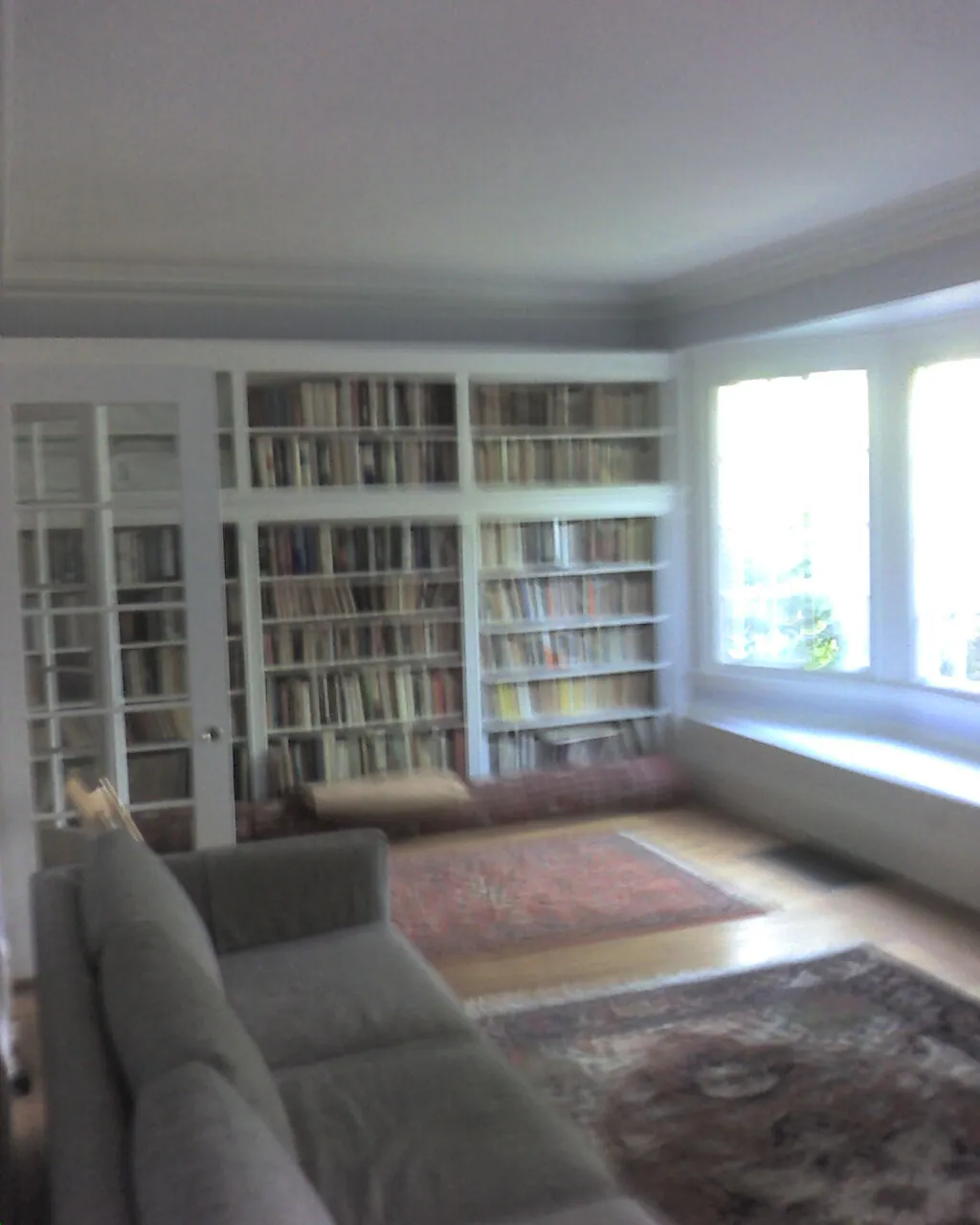
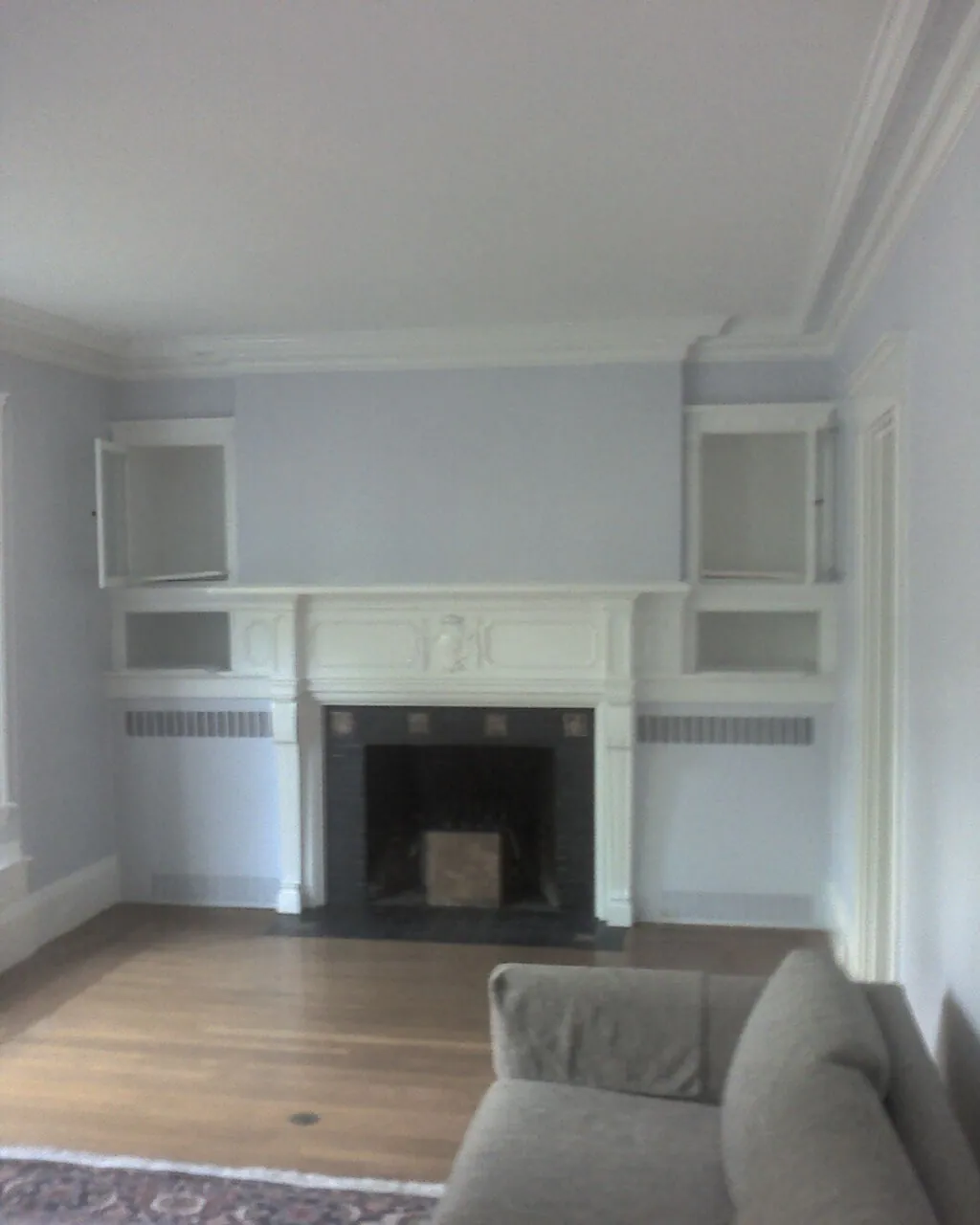
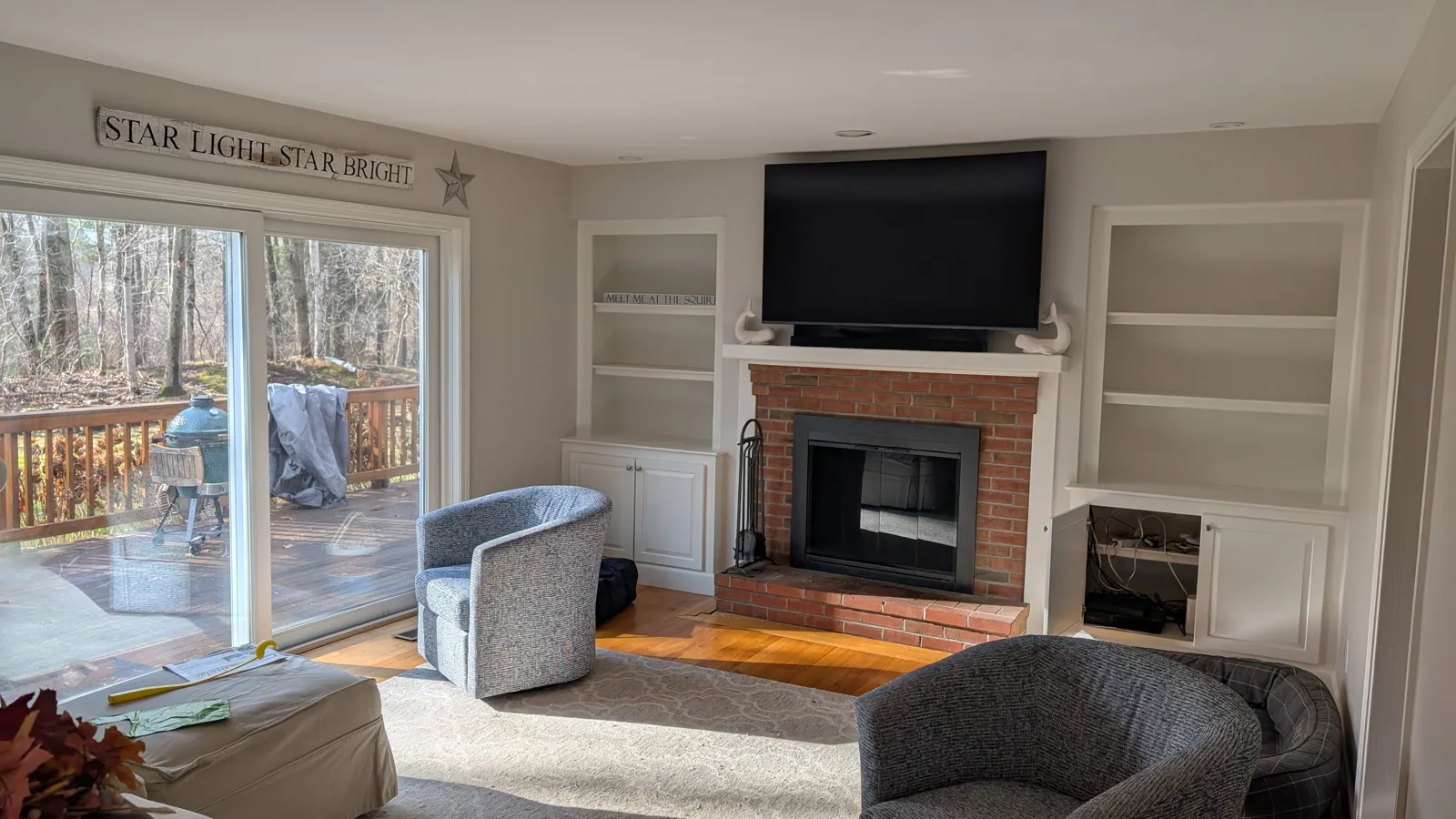
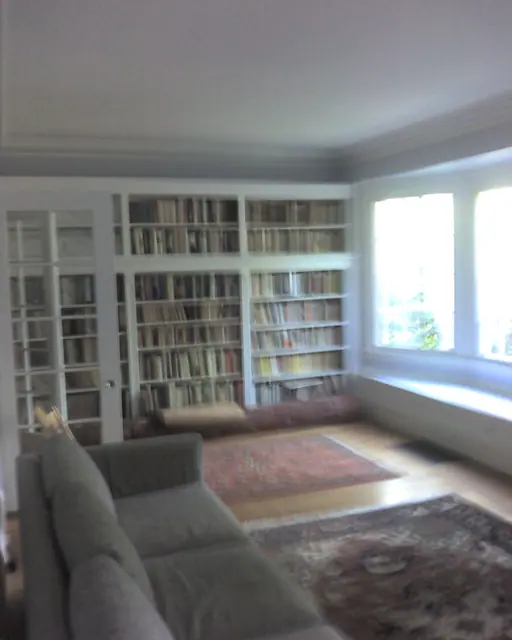
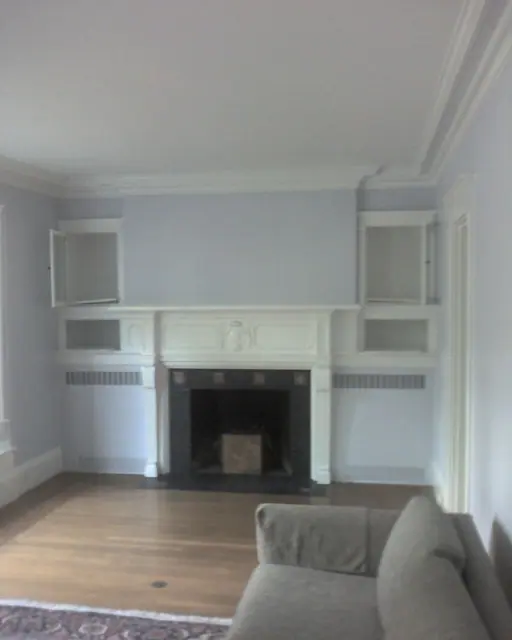
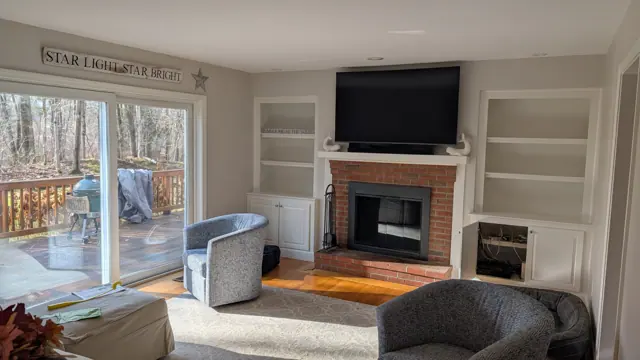
Yes. Bathroom vanities, bookcases, mantels and built-ins get the same prep and finish as kitchen cabinets.
Will there be a smell?
There is some odor while the finish dries. Ed will tell you what to expect from the product he picks for your cabinets.
Cabinet Painting in
20 towns around Stow.
Beacon is based in Stow and works about 18 miles in every direction. Pick your town to see how Ed works there.
What your estimate
will spell out.
Ed walks the house himself, then writes down every step and every product for your cabinet painting job, so you know exactly what you're paying for.
- Degreasing
- Sanding and filling
- Bonding primer
- A hard, smooth finish
- Doors, frames and built-ins
- Hardware off and back on
Ed NorrisWalks every house himself