Mildew on house siding
and how to deal with it.
Those gray specks on the shady side of the house are common in New England. Here is how to tell what they are, clean them safely and slow their return.
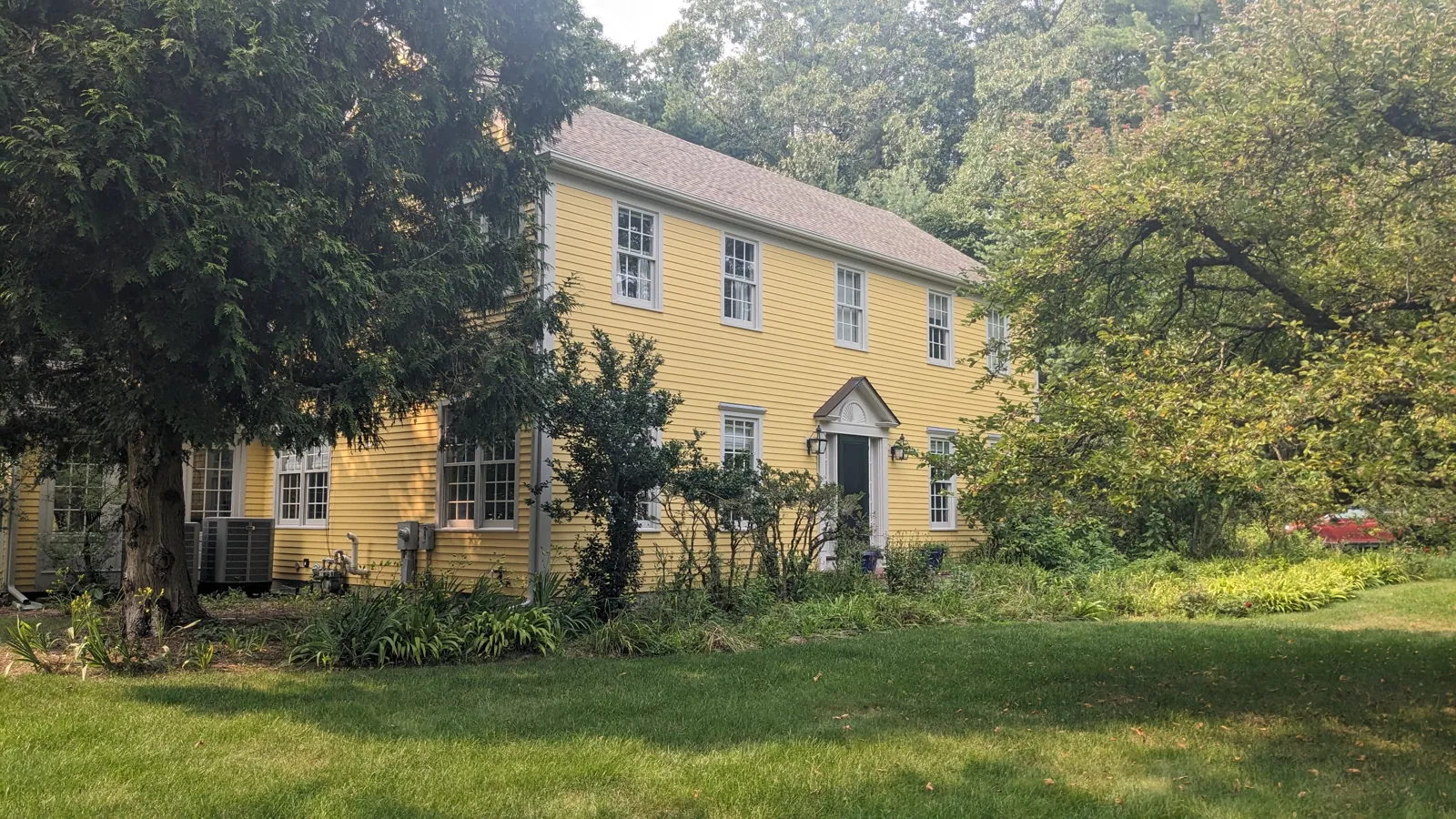
Trees and shrubs close to the siding keep walls shaded and slow to dry
First, make sure it is mildew
Mildew usually shows up as gray or black specks, often in patches, on the shady parts of a house. It looks a lot like dirt, so try a simple test. Put a drop or two of household bleach on the spot and wait a minute or two. If it lightens, it is probably mildew. If it stays dark, it is more likely dirt or soot.
A few look-alikes are worth knowing:
- Green film. This is usually algae. It likes the same damp, shady walls and cleans up much the same way.
- Hard black dots. Tiny raised dots that look like tar, often low on the wall near mulch beds, may be artillery fungus. They grip tightly and normal washing often leaves them behind.
- White, chalky powder. That is usually old paint breaking down. It rubs off on a dark cloth.
Why it grows where it grows
Mildew needs moisture, shade and something to feed on, such as dirt, pollen or the paint film itself. That is why it tends to start on north walls, under deep eaves, behind shrubs and beneath big trees. Walk around the house on a damp morning and notice which walls stay wet the longest.
Leaks can feed it too. A clogged gutter, a dripping downspout or a sprinkler that hits the wall can keep one patch of siding wet for days. If mildew forms a neat stripe or sits under one corner of the roof, look for the water source above it.
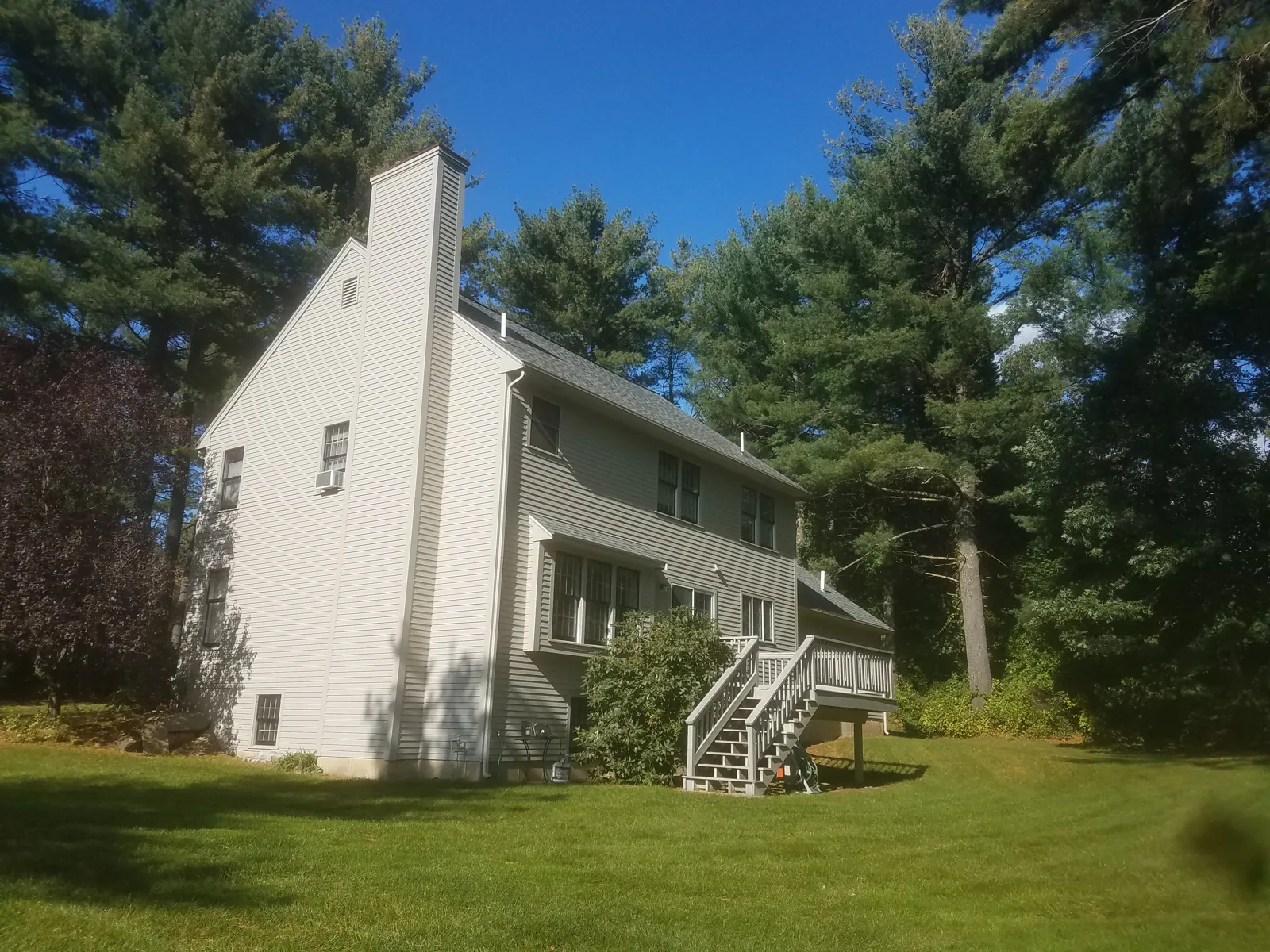
How to clean mildew off siding
- Protect what is around the wall. Wet down nearby plants, cover them, and keep water away from outdoor outlets and lights. Wear gloves and eye protection.
- Use a cleaner made for the job. Choose a house wash labeled for mildew and your type of siding, and follow the directions. A common homemade mix is one part household bleach to three parts water. Never mix bleach with ammonia or any cleaner that contains it, because the fumes are dangerous.
- Work in small sections. Apply the cleaner, give it a few minutes, and scrub gently with a soft brush. Do not let it dry on the wall.
- Rinse well from the top down. A garden hose is enough for most small areas.
- Let it dry. If paint comes next, allow at least a day or two of dry weather, and longer on shaded walls.
Go easy with a pressure washer. Too much pressure can drive water behind siding, raise the grain on wood and leave streaks. Never use one from a ladder.
Keeping it from coming back
- Trim shrubs and low branches so air and sun can reach the wall.
- Keep gutters and downspouts clear and draining away from the house.
- Rinse shaded walls when you first see dirt or specks building up.
- When you repaint, ask about an exterior paint with mildew resistance. It helps, but it will not make up for a wall that never dries.
When it is more than a cleaning job
Washing will not fix siding that is soft, cracked or peeling. Press a screwdriver gently into any suspicious board. If it sinks in, the wood may be rotting and should be repaired before any new coating goes on. If your house was built before 1978, the old paint may contain lead, so ask how any washing or scraping will be handled before work starts.
How Beacon handles mildew
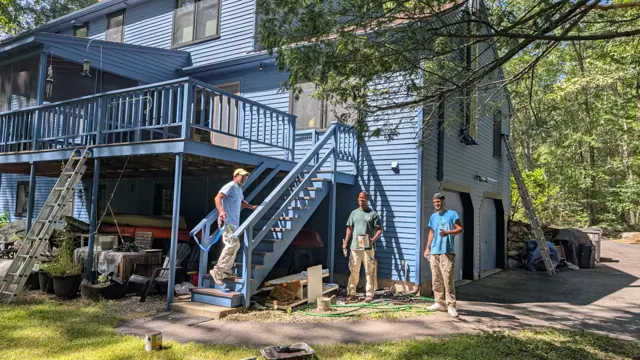
In Stow, damp air off Lake Boon and shade from the trees bring mildew sooner, and houses near the Assabet River in Gleasondale see extra moisture too. On an exterior painting job, Ed Norris walks every side of the house himself, checks for mildew, peeling paint and rot, and puts each step in a written estimate. The crew protects plants and fixtures, washes at a pressure that suits the siding, and lets the house dry before scraping and priming. If your paint is sound and the siding only needs a clean, washing can be booked on its own.
Want this on your house?
Questions about
mildew on siding.
Or ask Ed himself: call now.
Can I paint over mildew?
No. Mildew left on the wall can keep growing under the new coat, and paint will not bond well to it. Clean it off, rinse, and let the siding dry fully before priming or painting.
Why does mildew keep coming back on the north side of my house?
The north wall gets the least sun, so it stays damp longer. Cleaning removes what is there, but the conditions remain. More airflow, trimmed plants and working gutters all help.
Is it safe to pressure wash mildew off vinyl siding?
It can be, at low pressure. Too much force can push water behind the panels. Spray level or downward, never up under the laps, and let a cleaner do most of the work.
How often should siding be cleaned?
There is no fixed schedule. Shaded walls and houses under trees get dirty faster than open, sunny ones. When mildew or grime starts to show, it is time for a wash.
Questions about your house? Call Ed at (978) 567-9893.