Why exterior paint peels
and how to fix it.
Peeling paint on a New England house is rarely just bad luck. Here is what is usually behind it, what to do about it, and when a spot repair is enough.
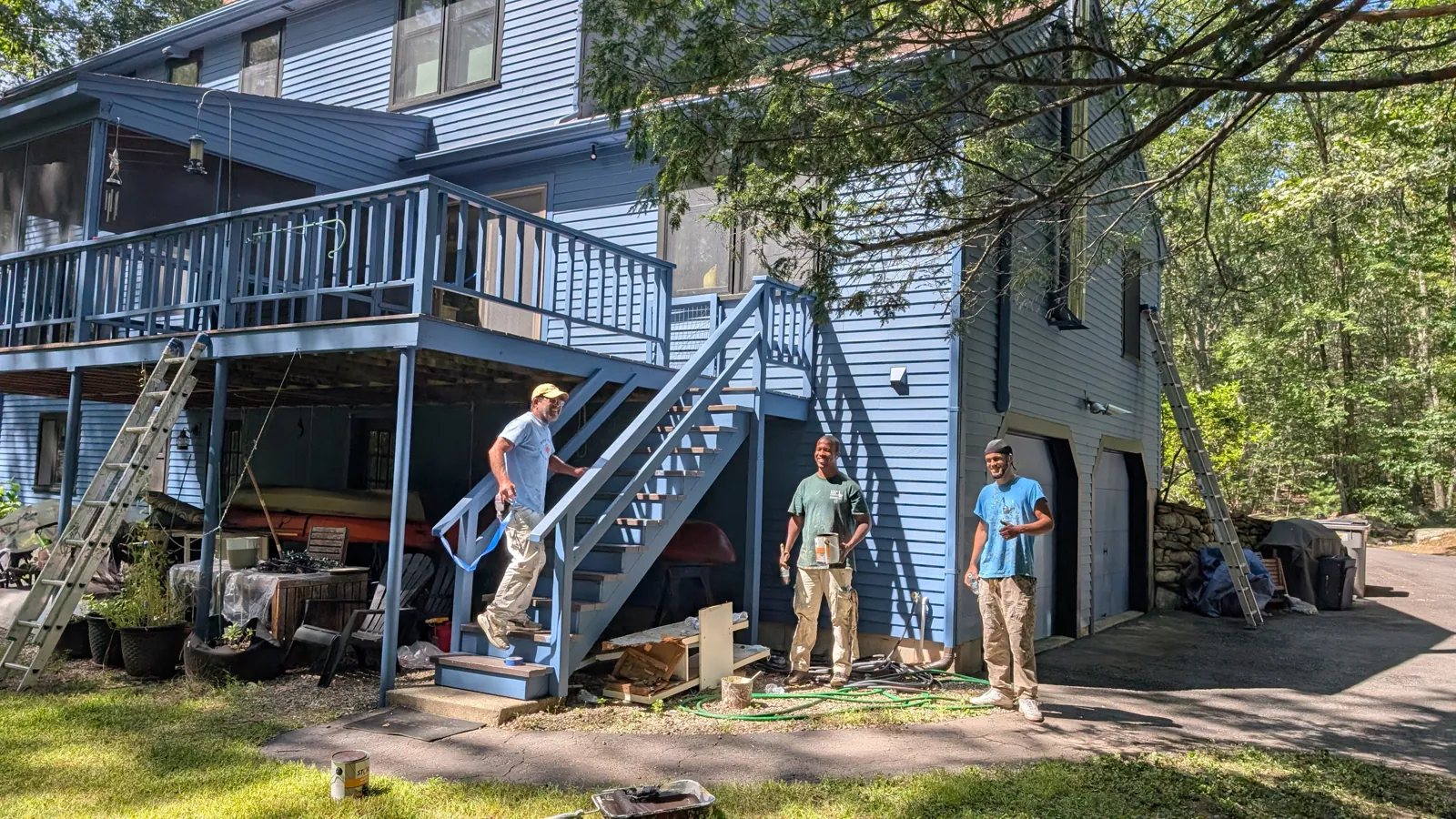
A Beacon crew at work on an exterior painting job
Peeling is a symptom, not the problem
Paint peels when it stops sticking to what is underneath. Usually something got between the paint and the wood: water, dirt, a chalky old coating, or a primer that never bonded. Scrape and repaint without fixing that, and it often peels again within a season or two.
Where it peels tells you a lot, so walk around the house and note which sides and boards are affected.
What usually causes it
- Water getting behind the paint. A leaking gutter, a failed caulk line, a bad joint at a window or corner, or shrubs pressed against the siding can all feed moisture into the wood. Peeling near the ground or below windows often points here.
- Sun on one side, shade on the other. South walls bake and their paint usually wears first. The north wall stays damp and can grow mildew. One house, two different problems.
- Freeze and thaw. Water gets into a hairline crack, freezes, expands and opens it wider, again and again through a New England winter.
- Thin prep. Paint will not hold over dirt, mildew, chalky residue or loose old paint.
- Paint that does not suit the old coating. Some paints bond poorly to others, so the primer has to be matched to what is already on the house.
- Bad weather on painting day. Exterior paint needs dry wood and mild temperatures to cure. Damp siding, rain or a cold night can leave a weak film.
- Rot. Paint cannot hold on soft or rotted wood.
How to fix it properly
- Stop the water first. Check gutters, downspouts, caulk lines, trim joints and flashing. Paint will not stay on wood that keeps getting wet.
- Scrape off everything loose. Keep going until what is left is firmly stuck down, then sand the edges smooth so they do not show as ridges.
- Wash it and let it dry. Remove dirt and mildew, go easy on old wood because hard pressure can force water into it, and let the wood dry out completely.
- Repair and prime. Replace rotted boards, caulk open joints, and prime bare wood with a primer made for that surface.
- Repaint in dry, mild weather. Two finish coats, with clean lines cut in at windows and corners.
Spot repair or a full repaint?
If the trouble is limited to one wall or a few trim boards and the rest of the paint is sound, repairing those areas can be enough. If paint is lifting in many places, or flaking on every side, the coating is probably worn out across the house, and patching leaves new paint beside old paint that is about to let go.
There is no fixed schedule, because sun, shade, siding and the quality of the last job all change how long paint lasts. In Massachusetts the usual window for outside work is late spring through early fall, so peeling you spot in winter is worth planning for spring.
A note on older houses
A house built before 1978 may have lead paint under the newer layers, and scraping or sanding it can put harmful dust in the air. Older homes may need extra care, so ask any painter how they handle prep on a house like yours before work starts.
How Ed Norris handles a peeling house
Beacon Painting is based in Stow and works in 20 MetroWest towns. Beacon's exterior painting starts with Ed walking every side of the house himself, looking for peeling paint, rot and mildew, then writing up every step and product in a detailed estimate. The crew power washes, scrapes, sands, primes with a product matched to the siding, and caulks open seams before two finish coats go on. If Ed finds rot, he tells you before any paint goes on so it can be repaired first.
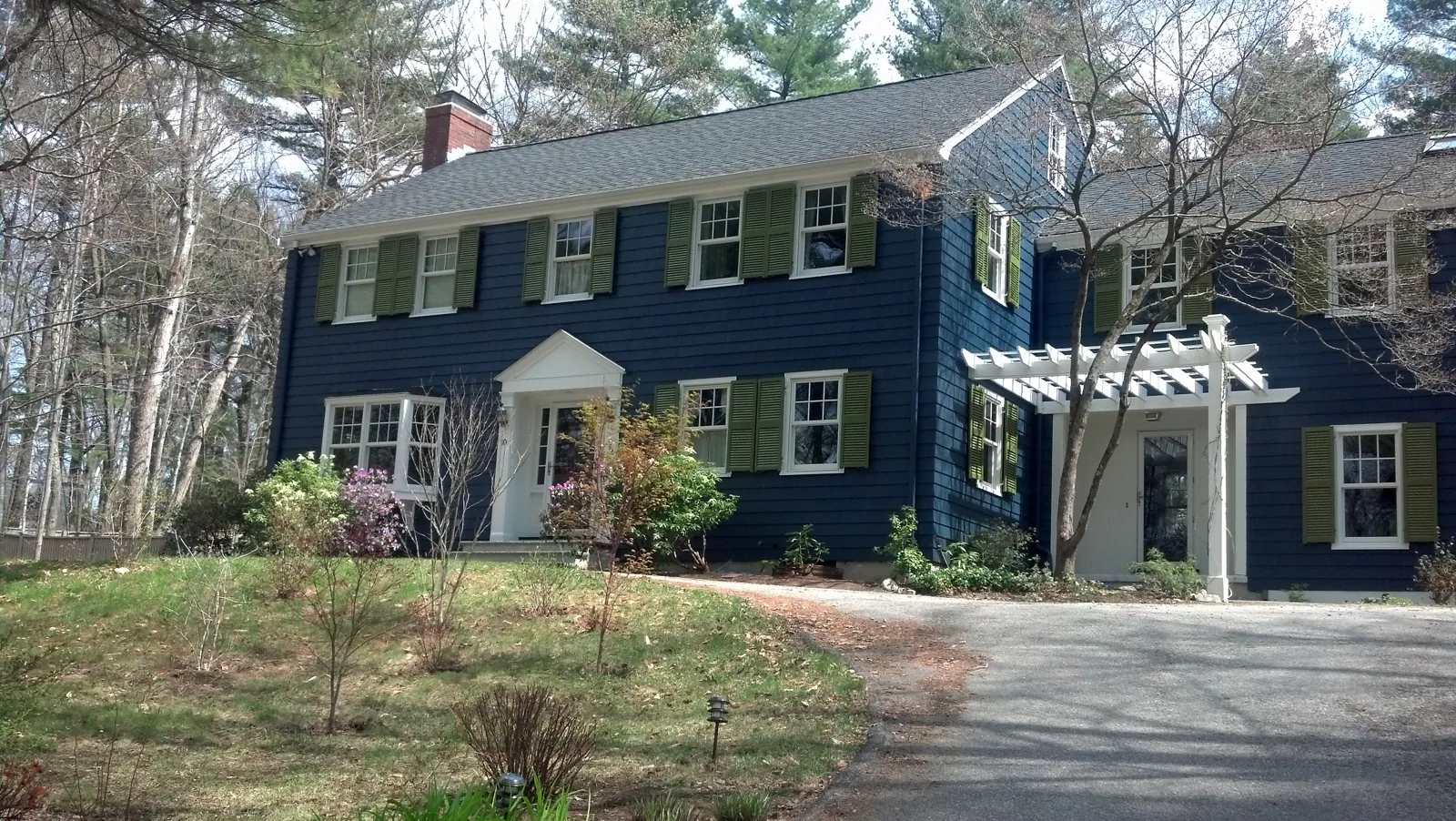
Around Lake Boon in Stow, damp air and shade bring mildew sooner, so washing and primer choice matter even more.
Want this on your house?
Questions about
peeling paint.
Or ask Ed himself: call now.
Can I just paint over peeling paint?
Not for long. New paint only sticks as well as the surface under it, so loose paint must be scraped back, the edges sanded and bare wood primed first. Otherwise the new coat tends to lift too.
Why does paint peel on the north side of a house?
The north wall gets the least sun, so it stays damp longer and holds moisture and mildew, which can push paint off from behind. Wash it and let it dry fully before priming.
Does peeling paint mean the siding is bad?
Not necessarily. Most peeling is a prep problem that scraping, priming and repainting can solve. Rotted wood is different: paint cannot save it, so it should be replaced first.
When is the best time to fix peeling exterior paint in Massachusetts?
Late spring through early fall. Most exterior paints want dry siding and temperatures above about 50°F, plus a few dry hours before rain or evening dew.
Questions about your house? Call Ed at (978) 567-9893.